Featured Project / Research + ArchivesPang Xunqin / 1906–1985

Digital exhibition study

Pang Xunqin庞薰琹

From a 311-page exhibition catalogue to a searchable research environment, relationship map, chronology, and guided route.

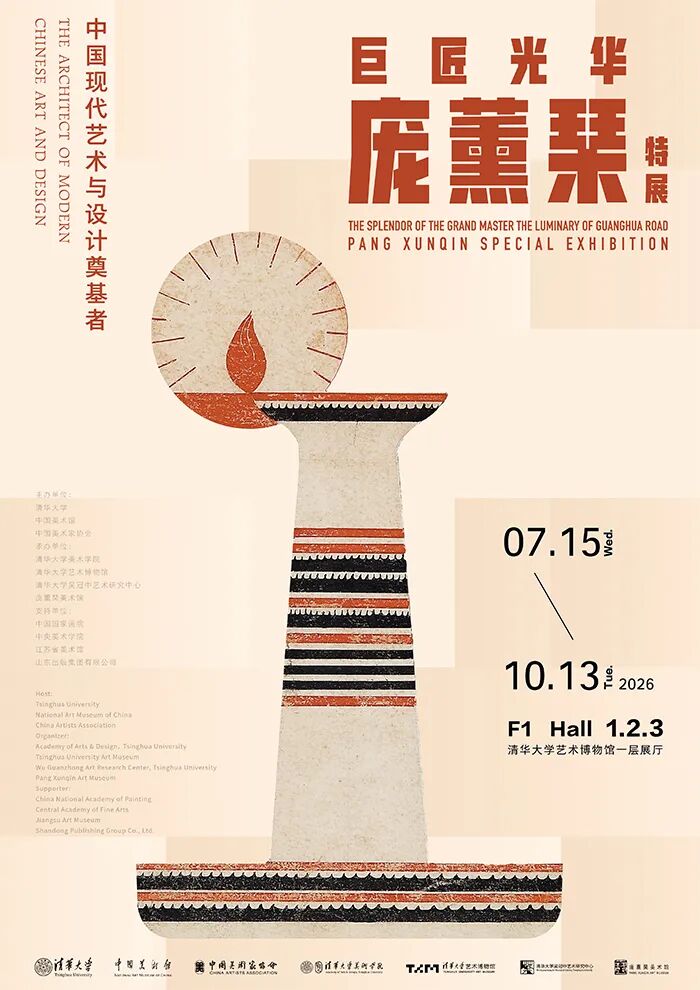
Poster for the 2026 Master’s Radiance: Pang Xunqin Special Exhibition
Official exhibition poster / 2026Source ↗
01311

catalogue pages

0212

research chapters

03200

chronology events

0431

mapped relationships

0510

guided stops

0691.8%

search Recall@10

Curatorial question / 01

What can a catalogue become after the exhibition?

Pang Xunqin was a painter, designer, researcher, educator, co-founder of the Storm Society, and a foundational figure in modern Chinese design education. A conventional catalogue documents those roles, but its page sequence makes their connections difficult to follow.

This project treats the catalogue as source material rather than the final interface. It keeps every page visible while adding structures that print cannot easily provide: linked events, relationships, thematic paths, measurable retrieval, and a visitor-oriented route.

Research pipeline / 02

Six transformations of the source

01

Acquire

Preserve all 311 catalogue pages as the stable visual and documentary source layer.

02

Read

Run OCR, repair text, and identify where page structure carries meaning that plain extraction would lose.

03

Structure

Translate the catalogue into twelve thematic chapters, a chronology, people, works, places, and institutions.

04

Connect

Map thirty-one relationships so the artist appears inside networks of modern art, design, education, and travel.

05

Retrieve

Build evidence-linked search across page text and structured records, then measure whether relevant material is found.

06

Guide

Compose a ten-stop route that turns dense research into a coherent first encounter for a visitor.

Interpretive lenses / 03

Three ways through one life

I

Life as chronology

Two hundred events connect study in Paris, the Storm Society, wartime travel, design research, and art education into one navigable sequence.

II

Practice as a network

People, schools, movements, places, publications, and works reveal how painting, craft, pattern, and institution-building shaped one another.

III

Exhibition as a route

Ten stops offer a human-scale path through the archive, with each interpretation returning to the catalogue page that supports it.

Search quality / 04

91.8%Recall@10

A research interface must be accountable.

Search was tested against representative questions, reaching 91.8% Recall@10 with approximately 969 ms P95 latency. The purpose of those measurements is simple: a beautiful archive is not useful if relevant evidence remains buried.

Working principle / 05

A digital exhibition is not a PDF viewer.

It should preserve the authority of the source, expose the structure of the research, and give different visitors different ways to enter—without pretending that interpretation is the same thing as evidence.

View official exhibition context